Never Apologize: Why Refusing to Explain is Your Only Move
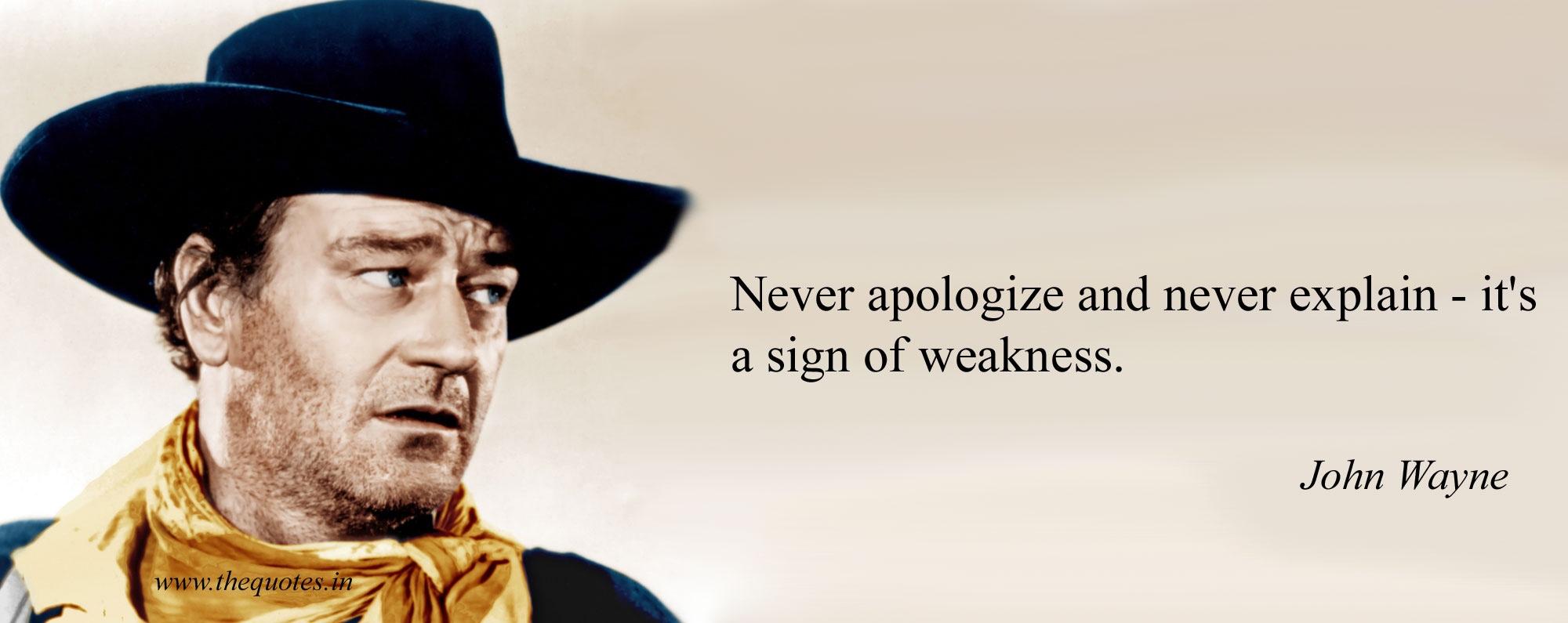
John Wayne was right about apologies being a sign of weakness. Do not apologize for things you didn't do and learn when silence is your best weapon
By Your Bro · · Self Improvement
A man who constantly feels the need to apologize is a man who is constantly looking for permission to exist.
Key Takeaways
Apologizing for things outside your control signals a lack of confidence.
False apologies often invite more conflict rather than ending it.
Research shows that refusing to apologize can actually boost self-esteem and feelings of power.
Guilt should be reserved for genuine, controllable errors that caused real damage.
The Duke Was Right
"Never apologize and never explain. It's a sign of weakness." John Wayne was the embodiment of masculinity, and this quote is one of his everlasting lessons for men of all ages. This isn't about being a jerk. It's about ownership. I hear guys pathetically apologizing for things they have little control over all the time. They apologize for the weather, for the traffic, or for a waiter being slow. This makes people think less of you. A few examples of things you don't need to apologize for include sneezing, standing in someone's way, getting bumped into by someone else, or being interrupted. You didn't do anything wrong, yet your first instinct is to take the blame. It's a reflex that suggests you are smaller than the person in front of you.
Is it a defense mechanism? Are people nervous? Not sure, but what I do know is that it's weak, and it sets you up to fail. Unless you genuinely fuck up and your error was in your control and the obvious cause of something terrible, do not apologize for anything. When you do, all the apology does is put you in a situation to be attacked. Most people who decide to apologize falsely believe the apology will end the conflict, but in reality, it often does the opposite. If you've ever dealt with unpredictable relationships, you know that an apology is usually just blood in the water for some people.
The Psychology of the Punching Bag
Apologizing for something admits guilt and opens you up to more attacks. With the apology comes the implied admission of responsibility. Once you let someone know you wronged them, you give them the green light to beat you down some more. Who wants to be a punching bag? In her book, "The Power of an Apology," psychotherapist Beverly Engel says over-apologizing isn't so different from over-complimenting. You may think you're displaying yourself as a nice and caring person, but you're actually sending the message that you lack confidence and are ineffectual.
Engel warns it can even give a certain kind of person permission to treat you poorly or even abuse you. Apologizing communicates the idea that you lack confidence in your actions or decision-making ability. If you are quick to apologize, it makes one wonder where your logic was when you made your decision. It suggests you don't trust yourself to handle problems properly. On top of diminishing your credibility, you become perceived as a passive observer instead of a power player. This isn't just about how others see you. It's about how you see yourself. Over time, it can erode self-esteem and confidence, leading to feelings of disentitlement and self-reproach.
The Power of No Remorse
Refusing to apologize has documented psychological benefits. A study published in The European Journal of Social Psychology found that participants who refused to express remorse after being asked to do so showed signs of greater self-esteem and increased feelings of power and integrity. This isn't about being stubborn. It's about refusing to compromise your personhood just to make the room more comfortable for someone else. Researchers found that keeping your stance intact reinforces your sense of value. It proves to your brain that you aren't a mistake that needs to be erased.
Real-world data often backs this up. The American Psychological Association has noted that repetitive, unnecessary apologies can actually make social interactions more awkward by placing a burden on the listener to reassure the person who is apologizing. You think you're being polite. They think you're a project they have to manage. It's the same feeling you get when you're watching a guy cry on LinkedIn for clout. It's uncomfortable because it's desperate.
The Social Cost of Explaining
I remember a guy I worked with named Dave. Sharp guy, but he suffered from the "never-ending explanation." If Dave were five minutes late because of a multi-car pileup, he wouldn't just sit down and get to work. He'd spend ten minutes explaining the route he took, why the GPS failed, and how sorry he was for the delay. By the time he finished, he had wasted even more of everyone's time and looked like a panicked child. If he had just walked in, sat down, and contributed, nobody would have cared. Instead, he made his lateness the center of the morning. He was begging for a boss to tell him it was okay. Don't be Dave.
When you explain, you are submitting your actions to someone else for their approval. You are saying, "I did this, but let me tell you why it’s okay so you don't get mad at me." A man who knows his value doesn't need to justify his movements. If you make a choice, stand by it. If people don't like it, that is their business. You are not a customer service representative for your own life.
Knowing When it Actually Matters
Does this mean you never own your mistakes? No. If you back your truck into your neighbor's fence, don't stand there like a statue. You fix the fence. But even then, you don't need a three-page script about how sorry you are. "I hit your fence. I'm going to pay for it or fix it by Saturday. "That is leadership. That is ownership. That is different from an apology. An apology is a plea; ownership is a plan.
Most men apologize because they are afraid of conflict. They hope that saying they are sorry will act as a shield. It doesn't. It acts as a target. If you are constantly looking for an exit from the tension of being a man, you will eventually find yourself with no ground left to stand on. Have confidence in your ability to solve problems and stand by your decisions. You are nobody's punching bag.
What To Do This Week
Count how many times you say "sorry" for things that aren't your fault, like the weather or being in a public space.
The next time you are interrupted, do not apologize for continuing your thought.
If you are late or make a minor mistake, state the fact and the solution without offering a long explanation.
Practice silence after you make a decision instead of justifying it to people who weren't involved.
—Your Bro