Situational Awareness Data: 11 Facts on Victim Selection
Explore situational awareness statistics and current crime data to understand how predators select targets and why distraction is your greatest safety risk.
By Your Bro · · Self Improvement
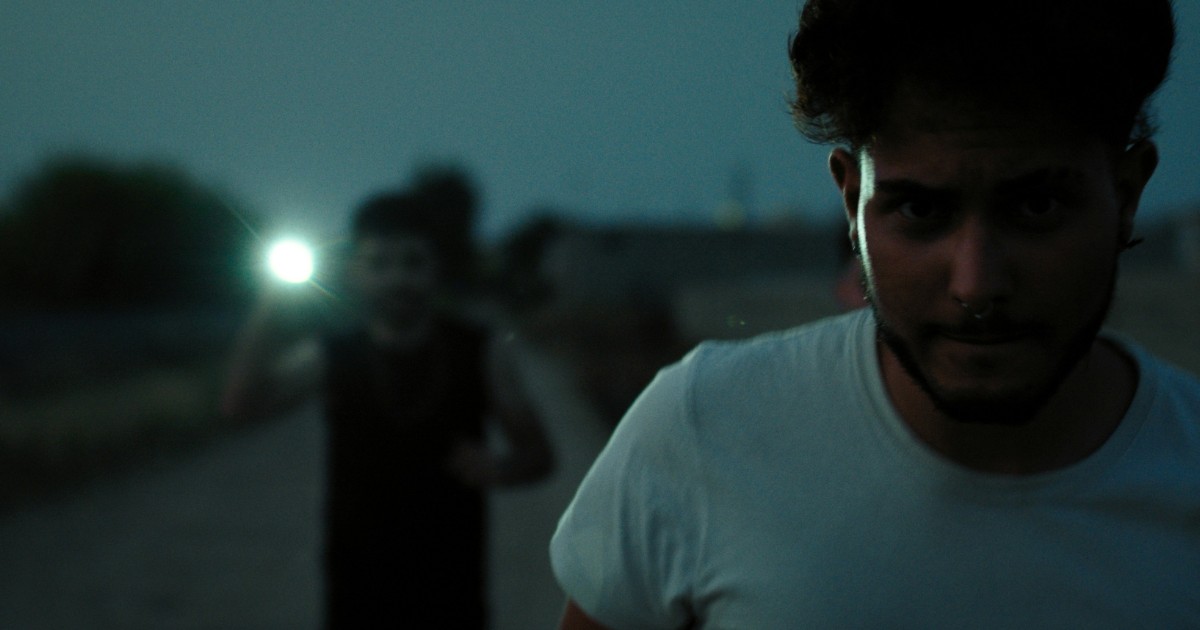
Situational awareness is incompatible with smartphones. Modern life is designed to keep your head down. Between the digital glow of your smartphone and the mental fog of a demanding career, your natural defenses are at an all-time low. If you aren't paying attention to the environment, you are effectively invisible to your own safety mechanisms but highly visible to those looking for a target.
Key findings
Victims are frequently chosen based on cues of vulnerability and poor physical awareness.
Public transit and parking facilities remain high-risk zones for physical altercations.
The presence of a smartphone is the primary driver of environmental blindness in modern men.
Property crime and violent theft are often crimes of opportunity rather than planned tactical strikes.
The numbers
Violent crime rates show a persistent threat
The FBI reported that the estimated volume of violent crime offenses was 1,232,428 nationwide in a recent reporting period.
This number represents a baseline of the environment you navigate daily. While you cannot control the actions of others, you can control whether you appear as a low-effort opportunity. Most of these incidents occur in public or semi-public spaces where the victim was caught off guard.
Source: FBI Uniform Crime Reporting (UCR) Program, 2023
Distraction is the predator's best friend
According to research published in the Journal of Environmental Psychology, individuals looking at smartphones are 40% less likely to notice unusual peripheral activity.
Walking with your head down isn't just a social faux pas; it is a tactical error. When your eyes are fixed on a six-inch screen, your reaction time to a closing threat drops to near zero. A predator looks for this specific lack of environmental engagement before deciding to move. They realize at this moment, you have zero situational awareness.
Source: Journal of Environmental Psychology, 2021
Parking lots are high-risk transition zones
Bureau of Justice Statistics data indicates that approximately 1 in 10 property crimes and a significant portion of violent crimes occur in parking lots or garages.
The transition from a secure building to your vehicle is the moment you are most vulnerable. You are usually fumbling for keys or thinking about your next destination. This is why the "Five-Second Scan" is mandatory before you reach for your door handle.
Source: Bureau of Justice Statistics (BJS), 2022
Subway and transit violence is trending upward
Analysis of major metropolitan transit data showed a 14% increase in felony crimes on transit systems in key urban hubs during the early 2020s.
If you commute via public transit, your awareness needs to be dialed to a ten. Confined spaces and predictable routes make it easier for individuals to track your movement. Notice who stays on for multiple stops and who is watching the crowd rather than the map.
Source: Metropolitan Transportation Authority / NYPD Data, 2024
The high cost of motor vehicle theft
The National Insurance Crime Bureau reported that more than 1 million vehicles were stolen in a single year, the highest at any point since 2008.
Carjackings and thefts often happen because the owner is distracted during the loading or unloading process. Awareness starts before you put the car in park. Check your mirrors before you kill the engine.
Source: National Insurance Crime Bureau (NICB), 2023
Aggravated assault often involves a weapon
Statista reports that there were over 800,000 reported cases of aggravated assault in the U.S. within a twelve-month period.
Aggravated assault is defined by the intent to cause serious bodily injury, usually with a weapon. These aren't just scuffles; they are life-altering events. Situational awareness isn't about winning a fight—it's about seeing the threat early enough to avoid the fight entirely.
Source: Statista, 2023
Strangers are the primary threat in public robberies
Department of Justice research indicates that 75% of robberies are committed by a stranger to the victim.
You cannot rely on social intuition to protect you because you don't know these people. You must rely on behavioral cues. If someone is closing distance rapidly or trying to cut off your path of travel, your internal alarm should be screaming.
Source: Department of Justice (DOJ), 2020
Vulnerability is perceived through gait
Classic research in the field of nonverbal behavior suggests that criminals can identify vulnerable targets in less than 7 seconds based solely on how they walk.
Slumped shoulders, short strides, and a lack of eye contact signal that you are unaware of your surroundings. Walking with purpose and keeping your chin up doesn't just make you look confident—it makes you a harder target to select.
Source: Journal of Interpersonal Violence (re-evaluating Grayson and Stein), 2019

Targeting the lone traveler
PEW Research notes that men are increasingly likely to live alone and spend more time in public spaces solo, increasing the statistical window of vulnerability.
There is safety in numbers, but modern life often requires us to be alone. If you are solo, you don't have a second set of eyes to watch your back. You have to be your own security detail.
Source: Pew Research Center, 2023
The rise of “Jugging” and following victims
Law enforcement agencies have seen a surge in 'jugging' incidents, where suspects follow victims from banks—crimes that rely on the victim not checking their rearview mirror.
Predators will follow a target for miles if they think the payoff is high. If you leave a high-value area like a bank or a luxury store, you must be hyper-aware of any vehicle or individual following your lead.
Source: Houston Police Department / Major City Chiefs Association, 2024
Cyber-Physical crossovers
The FTC reports that fraud often begins with a physical observation of a victim’s habits or discarded information, leading to significant financial loss.
Situational awareness extends to how you handle your physical data in public. Don't leave your mail in your car and don't shout personal details into your phone while standing in a coffee shop line.
Source: Federal Trade Commission (FTC), 2023
What this means for you
Awareness is not paranoia. Paranoia is a state of fear; awareness is a state of readiness. The data shows that crime is often a math problem for the predator. They are looking for the path of least resistance. If you are the man who looks up when the door opens, who scans the parking lot before exiting the store, and who keeps his back to a wall in a restaurant, you have already changed the variables in your favor.
Start practicing the Five-Second Scan today. When you enter a new environment, identify two exits immediately. Locate the people who seem out of place—the ones watching people instead of their surroundings. By the time you’ve done this, you’ve gathered more intelligence than 90% of the people in the room. That intelligence is what keeps you and your family safe.
Finally, put the phone away while you are in motion. Nothing on social media is worth the cost of being blindsided. You are a protector, and a protector cannot see a threat if his eyes are glued to a screen. Be the man who sees it coming.
—Your Bro
Your children do not need a father who lives in fear.
They need one who pays attention, prepares early, and knows what to do when something feels wrong.
PROTECTOR: A Father’s Guide to Keeping His Kids Safe gives you the practical knowledge to spot threats, strengthen your family’s defenses, and become the calm, capable protector your children can rely on.
Do not wait for a close call to start preparing.
Get your copy here:
https://enteringmanhood.gumroad.com/l/protector
Methodology note
The statistics cited in this article are derived from publicly available data provided by government agencies (FBI, BJS, FTC), peer-reviewed academic journals, and reputable research organizations (Pew, Statista). All data points were selected to provide a snapshot of the current safety landscape and were verified by our editorial team prior to publication to ensure accuracy and context.