Love vs. Possession: The Danger of the Nice Guy
Explore why forcing attraction through manipulation or shortcuts destroys real love. Learn to accept a woman's freedom and lead with genuine masculine courage.
By Your Bro · · Relationships
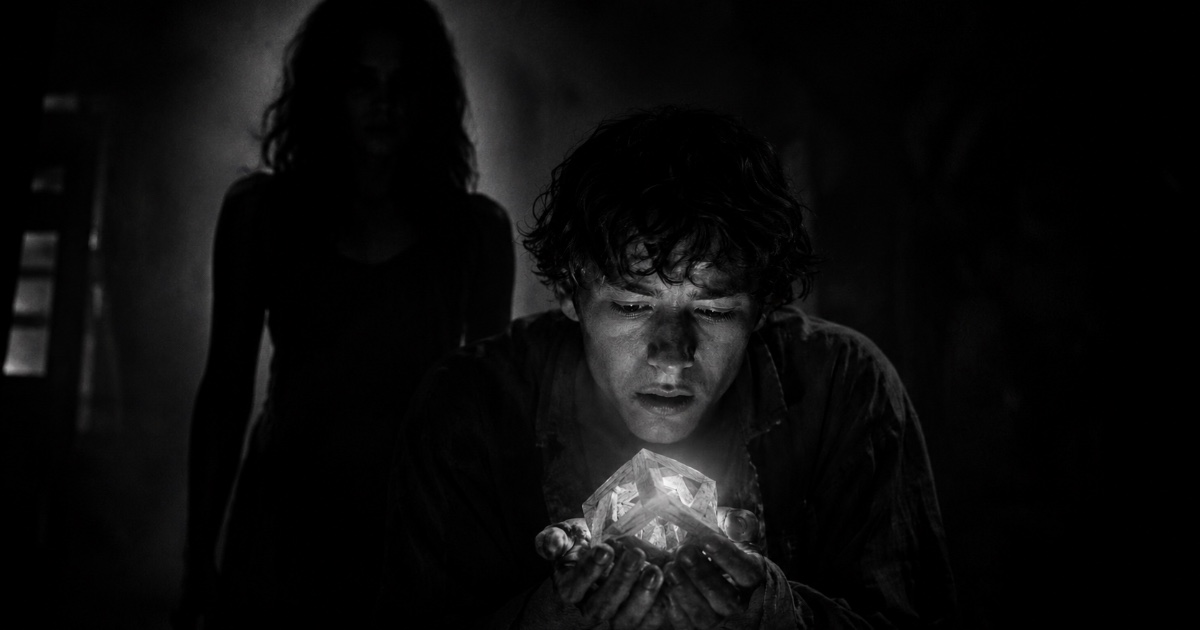
The most unsettling man in Obsession does not wear a mask or wait outside somebody’s window with a knife in his hand.
He works in a music store. He is quiet, awkward, and harmless-looking, with the soft manner of a man people describe as sweet because he has never given them a reason to look any closer.
His name is Bear, and he is in love with his friend Nikki.
At least, that is what he tells himself.
Bear cannot bring himself to say what he feels, because saying it would place the decision in her hands. She might feel the same way, or she might look at him gently and tell him she does not. Either answer would require him to stand there and accept that another human being is free.
Then he finds the One Wish Willow, a strange little object that offers him a way around all of that uncertainty.
He wishes for Nikki to love him.
The wish works, which is where the nightmare begins.
Bear does not become frightening because he suddenly changes into somebody else. He becomes frightening because the wish reveals what was already hiding beneath his shyness: he wanted Nikki, but he did not respect her enough to let her decide whether she wanted him.
A woman’s yes means something only because she is free to say no.
Bear could not live with that risk, so he removed it.
He already had a chance at something real
Bear and Nikki were not strangers passing each other beneath fluorescent lights. They already shared warmth, laughter, familiarity, and the ordinary closeness from which a real relationship might have grown.
Nothing guaranteed that it would, and that was precisely what frightened him.
A man can spend weeks wondering whether he should say something. He reads too much into a smile, replays a conversation while brushing his teeth, and drafts a message he never sends. None of this is pleasant, but it is honest because the woman remains free throughout it.
Bear wanted to skip that part.
He did not want to risk an awkward silence or drive home with his hands tight on the steering wheel after hearing no. He wanted certainty before courage, which is another way of saying he wanted the reward without submitting himself to the test.
That temptation reaches far beyond romance.
Men do it with careers, money, fitness, and faith. We keep searching for an arrangement that delivers the outcome while sparing us the exposed moment when we might fail. Most shortcuts appeal to us for the same reason: they promise control over something that was never fully ours to control.
Bear believed the problem was uncertainty, but uncertainty was the last honest thing left between them.
He reached for power before becoming a man who could carry it
Bear has no real understanding of the willow or what it might demand from him. He knows only that it appears capable of giving him what he wants, and that is enough.
A hollow man will reach for almost anything that promises relief.
The object changes from one generation to another. It might be a spell in an old story, a pickup manual passed around online, a manipulation tactic disguised as confidence, or a digital companion designed never to become tired of you.
The promise remains familiar: you will never again have to feel unwanted.
That promise sounds merciful when a man is lonely, yet it quietly asks him to surrender the very qualities that could have made him capable of love. Patience disappears first, followed by humility, restraint, and the willingness to hear an answer he did not want.
Bear does not merely use the willow. He kneels before what it offers.
He would rather command affection than become worthy of it.
His niceness was keeping a receipt
The film is smart enough not to dress Bear like an obvious predator. He is polite, hesitant, and easy to pity, which makes it tempting to excuse him long after his actions stop deserving sympathy.
Plenty of men build an entire identity around being nice because kindness sounds better than fear.
They wait nearby, make themselves useful, listen to every complaint, and privately assume that their patience will eventually be rewarded. When the woman chooses someone else, they feel cheated because they believed every favor was placing money into an account she would someday be required to repay.
That is not kindness.
It is a transaction conducted without the other person’s knowledge.
Real kindness does not create a hidden debt. A decent man can care for a woman, speak honestly about his intentions, and still accept that her answer belongs to her. He may feel disappointed, embarrassed, or wounded, but he does not treat her freedom as an injustice committed against him.
This is where Bear’s weakness becomes dangerous.
He sees himself as the injured party even while violating Nikki’s will. His pain becomes permission, and once a man believes suffering entitles him to control another person, he can justify nearly anything while continuing to call himself good.
The wish succeeds by destroying what he wanted
Once Nikki is forced into loving him, she begins to disappear.
The person Bear claimed to cherish is slowly replaced by someone whose attention exists only because he ordered it into existence. He gains possession while losing companionship, because a person cannot remain fully present inside a relationship built on the removal of her will.
He does not win Nikki.
He erases her.
That is why the wish feels so rotten even before the consequences become obvious. Bear receives the outward shape of what he wanted, but the living center has been taken out of it. He is left holding something that resembles love while knowing, somewhere beneath the relief and excitement, that none of it was freely given.
Sin often arrives that way.
A man reaches for something good through a crooked means, then discovers the crookedness has changed the thing itself. The money gained dishonestly never feels secure. The praise manipulated from others never quiets insecurity. The relationship controlled through fear or dependence never offers peace.
The method follows you into the reward.
Bear wanted certainty, and the certainty left him more alone than rejection ever could have.
The willow is already here
Most men will never find a carved object capable of bending another person’s heart, though modern life offers plenty of smaller imitations.
There are artificial companions built around permanent agreement, dating tactics that treat women like systems to be hacked, and men who use affection as a floodlight until a woman becomes dependent on its warmth. Some monitor phones, isolate girlfriends from friends, threaten self-destruction during arguments, or make commitment so emotionally expensive that leaving begins to feel cruel.
Each method says the same thing beneath the packaging: your freedom frightens me, so I will reduce it until I feel safe.
That is not masculine leadership.
It is fear wearing a man’s clothes.
A man who loves a woman must be willing to live beside the fact that she remains free. Marriage deepens the duty and raises the cost of betrayal, but even vows are meaningful because they are chosen and then faithfully kept. Love cannot be separated from the will without becoming ownership.
This is also why the artificial girlfriend should concern a young man beyond the obvious embarrassment of it. A machine can imitate interest without asking him to grow, forgive his selfishness without requiring repentance, and remain available without possessing needs of its own.
He may experience fewer rejections, but he will also receive fewer invitations to mature.
A mirror can reflect affection all night, but it cannot choose you.
The brave move usually looks ordinary
There is nothing dramatic about the proper alternative.
You become more honest, more capable, and less ruled by appetite. You take care of your body, build useful work, strengthen your friendships, and learn to speak plainly without turning every conversation into a performance.
Then, when you care for a woman, you tell her.
You do not circle her life for a year pretending friendship is enough while secretly resenting her for failing to read your mind. You do not study techniques for manufacturing attraction or punish her because another man had the nerve to act before you did.
You stand in front of her with no spell in your pocket and no guarantee waiting behind the curtain.
She may say yes, which will matter because she could have refused.
She may say no, and you will drive home disappointed, set your keys on the counter, and discover that the humiliation did not kill you. In time, you may even become grateful for the answer because it returned you to your own life instead of leaving you kneeling outside hers.
Bear wanted to escape that moment, and escaping it cost him everything that moment was meant to build.
A man does not become strong by receiving every answer he desires. He becomes strong by remaining honorable when the answer belongs to someone else.
The woman beside you should never be there because you cornered, tricked, exhausted, frightened, or programmed her into staying. She should be able to see the open door and still place her coat beside yours.
That is what makes her presence a gift.
Bear got his wish, though by the time he understood what he was holding, there was hardly anyone left inside it.
— Your Bro
Attraction isn’t luck. It’s built.
Stop hoping women (or people) are “just into you.” Start becoming the man they can’t ignore.
In Attraction is Built, I break down exactly how to build real, lasting attraction from the ground up — no tricks, no games, no pickup artist bullshit. Just the raw principles and habits that actually work.
If you’re tired of feeling invisible or stuck in the same patterns… this book is your blueprint.
Ready to build it?
→ Ebook on Gumroad
→ Paperback on Amazon
Do it now. Your future self will thank you.