US Soccer Equality Pay: a Socialist World Cup Prize Pool
Explore the US soccer equality pay deal during the 2026 World Cup as prize money is pooled and redistributed despite market demand differences.
By Your Bro · · Guy Stuff
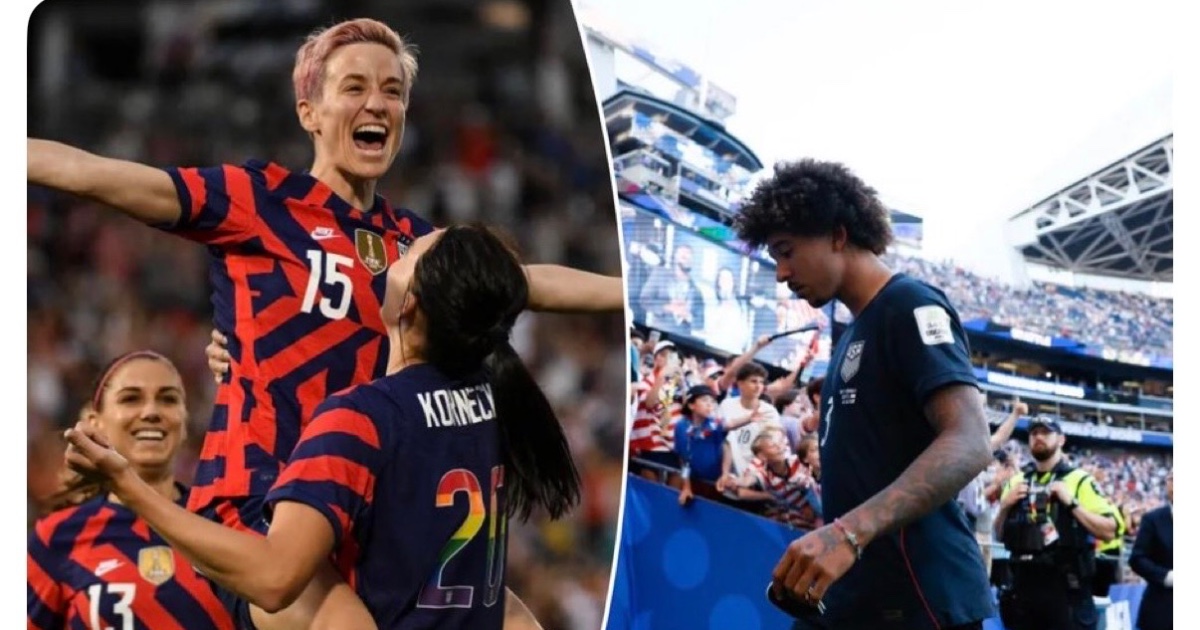
Brother, I told you this was coming back in 2022. I told you US soccer equality pay wasn't a one-time deal. Now you've watched it happen twice.
The USMNT just got bounced from the 2026 World Cup — Round of 16, 4-1 to Belgium, on home soil, in front of the whole country. It was a hard pill to swallow. But here's the part nobody's talking about at the barbershop: that loss still cashed a $16 million check from FIFA. And almost half of it isn't going to the men who earned it.
This isn't a soccer story. It's a story about what happens when you don't protect the value you create.
The Numbers, Straight
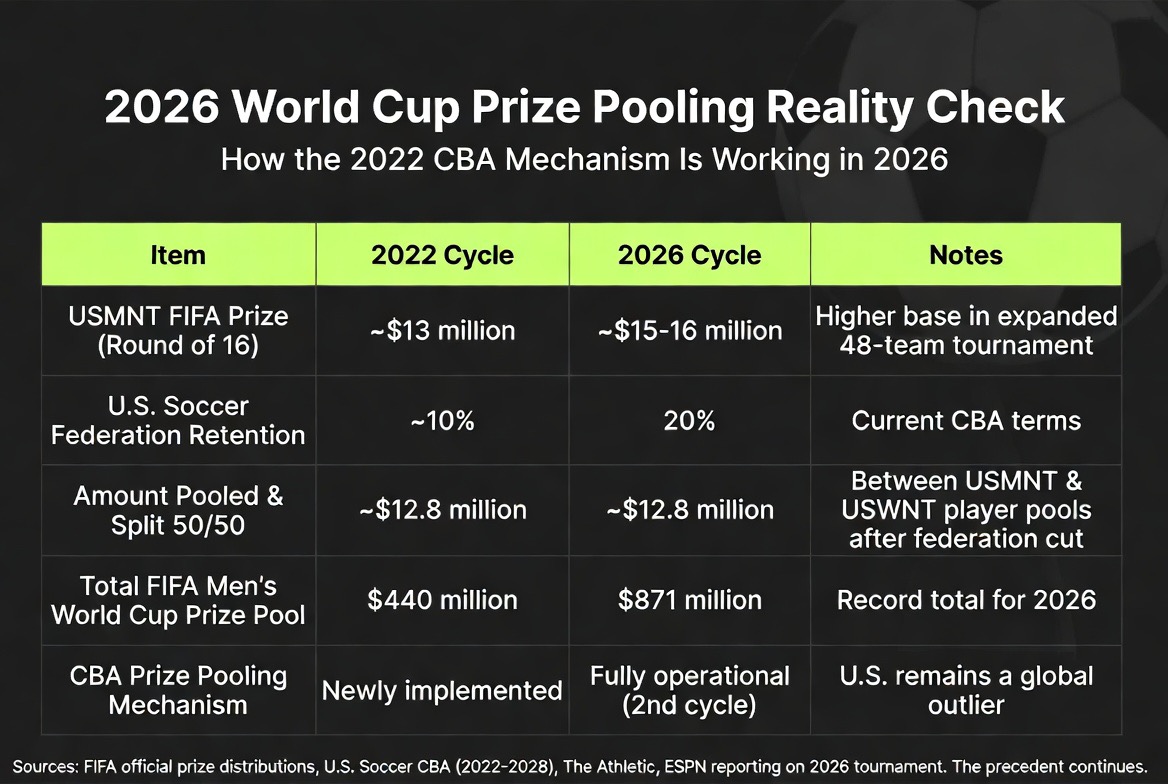
U.S. Soccer keeps 20% off the top — about $3.2 million. The remaining $12.8 million doesn't go to the 26 men who bled for it. It gets pooled with whatever the USWNT earns at the 2027 World Cup in Brazil, then split 50/50. Each side walks away with $6.4 million. Per player, that's roughly $246,000 — win or lose, earned or not.
The USWNT hasn't even qualified for 2027 yet. Doesn't matter. Their share sits waiting in an interest-bearing account until it does. The men's performance on the field this summer is already funding a payday for a tournament that hasn't been played.
This is the 2022 Collective Bargaining Agreement doing exactly what it was built to do — running through 2028, on schedule, no exceptions.
The Market Doesn't Care About the Agreement
Here's the part that should make you sit up. The world isn't pooling anything. FIFA's men's tournament dwarfs the women's in prize money, sponsorship, and eyeballs — it isn't close, and it wasn't close in 2022 either. The USMNT's group-stage games this summer pulled in some of the biggest U.S. soccer audiences ever recorded. That's real demand, real advertisers, real money changing hands based on who people actually show up to watch.
None of that gets reflected in the check the players take home. The external market says one thing. The internal system says another. And when those two things disagree, brother, the internal system always wins — because that's the one with the contract attached.
Why This Is Bigger Than Soccer
This isn't really about a game. It's about a structure — and structures like this exist in your workplace, your industry, your negotiations, whether anyone calls it a "CBA" or not.
Somewhere, right now, there's a version of this happening to you. A team, a company, a system where the guy who closes the deal, ships the product, or takes the risk watches his upside get redistributed to people who didn't. It gets dressed up in the language of fairness and equity. It gets sold to you as the mature, unifying choice. And once you sign it, it doesn't matter how well you perform next time — the split is already decided.
The USMNT players agreed to this back in 2022, as part of a broader settlement, before most of this roster ever set foot on a World Cup pitch. They're living with the terms now. Two cycles in, this isn't an experiment anymore. It's the rule.
What You Do With This
Don't let this turn into bitterness about the women's team, or into some argument you have on X for likes. That's not the lesson, and it's beneath you.
The lesson is this: whatever you build — whatever you produce that generates real, measurable value — protect the terms before you sign, not after. Read the fine print on every deal that touches your upside. Ask who benefits when you overperform. And if the answer is "someone who didn't do the work," walk away or renegotiate, because once that structure is locked in, your excellence stops being fully yours.
Generate value. Fight for the terms that let you keep it. That's the whole game — on the pitch and everywhere else.
— Your Bro
---
Sources: ESPN, Yahoo Sports, Men's Journal, and Associated Press reporting on the 2026 FIFA World Cup prize distribution and the 2022 U.S. Soccer collective bargaining agreements, July 2026.