Kobe Bryant on Life, Death, and the End of the Game
The Black Mamba didn't just play basketball. He lived a philosophy of urgency and finality that every man should study before his own clock runs out
By Your Bro · · Self Improvement
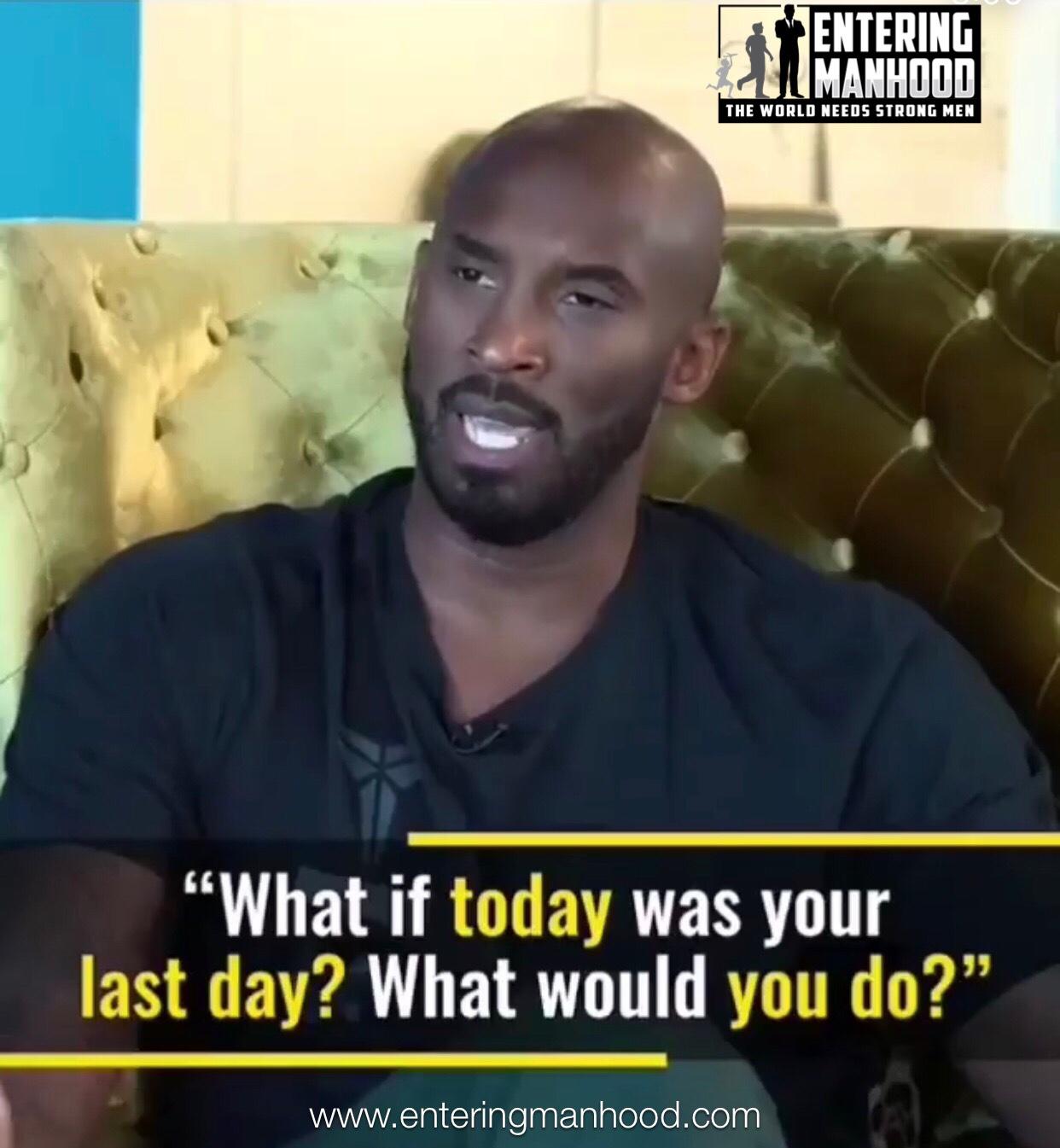
You can see it in his eyes in that final interview; Kobe Bryant wasn't just a retired athlete, he was a man who had stared at the end long before the end came for him.
Key Takeaways
- Mortality is the ultimate motivator for any man who wants to leave a mark.
- Accepting that the 'end' is coming allows you to play with more intensity today.
- Work ethic is not about the hours; it is about the emotional investment in the outcome.
- Legacy isn't a trophy case; it is the standard you set for the people watching you.
The Weight of the Final Whistle
Powerful interview with Kobe Bryant discussing life, death, and motivation. Love or hate Kobe, this one is worth watching. He speaks with a level of clarity that most men only find on their deathbed, yet he found it while he was still physically capable of dominating the world. He understood that the clock doesn't care about your potential. It only cares about the elapsed time.
We like to pretend we have forever. We act like there is always another season, another job, or another chance to fix the relationship we’re currently torching. Kobe’s perspective was different. He viewed the end of his career as a metaphorical death. It forced him to reconcile with his own limitations. Research from the American Psychological Association suggests that reflecting on one's own mortality can actually lead to increased prosocial behavior and better goal prioritization. Instead of making you morbid, it makes you focused.
The Mamba Mentality Was a Death Sentence
People throw around the phrase 'Mamba Mentality' like it’s a catchy slogan for a CrossFit t-shirt. It wasn't. For Bryant, it was an obsession rooted in the fact that every day was a withdrawal from a bank account that doesn't accept new deposits. He was notorious for showing up to the gym at 4:00 AM, not because he loved the dark, but because he was terrified of wasting the daylight.
I remember a buddy of mine who tried to adopt this for a month. He worked a sales job and decided he was going to be the first one in and the last one out, no excuses. By week three, he looked like a ghost, but he also realized he had been wasting four hours a day on 'busy work' that didn't move the needle. He had to face the fact that your time is bigger than money because once the time lapses, the money can't buy it back. Kobe knew this. He didn't just work hard; he worked with the terror of a man who knew the lights would eventually go out.
Refusing to Be a Victim of Fate
In the footage, Bryant discusses how many people are paralyzed by the fear of failing at the end. They don't want to take the last shot because they don't want the story to end on a miss. Kobe’s take was simpler: the miss is part of the story. If you aren't willing to fail, you aren't willing to live. This ties deeply into how you become the leader you were created to be. A leader doesn't fear the result; he fears the regret of not attempting the result.
He didn't moralize his success. He didn't act like he was special. He just acted like he was aware. Most men are sleepwalking through their thirties and forties, thinking they have a 'mid-life' left. But the average life expectancy for men in the U.S. has seen fluctuations, with CDC reports showing it hovering around 73-76 years in recent years. That is not a lot of time. If you’re 35, you’re likely at halftime. If you haven't started your mission yet, you’re down by twenty points with two quarters to go.
The Transition to the Next Life
Kobe’s transition from the court to storytelling and business was a masterclass in adaptation. He didn't mope about being an 'ex-player.' He died to that identity and gave birth to a new one. This is a difficult pivot for any man. Whether it’s a career change or a divorce, we often cling to the ghost of who we used to be until we rot from the inside out.
I've seen guys lose their jobs to shifting markets and spend years complaining about how things 'used to be' in the industry. It’s a waste of breath. As I mentioned when discussing how AI may take your job, the world doesn't owe you a continuation of your previous success. You have to be willing to bury the old version of yourself to make room for the man you need to become today. Kobe did that. He won an Oscar. He built a venture capital firm. He coached his daughters. He didn't look back.
Finality is a Gift
The core of the interview is the idea that the 'end' shouldn't be feared. It should be respected. Mortality gives life its flavor. If a game lasted forever, no one would watch. The buzzer is what makes the bucket meaningful. When you accept that you are going to die, and that every version of you—the athlete, the worker, the father—will also eventually 'end,' you stop playing small.
You stop worrying about whether you look 'creepy' or 'weird' for trying too hard. You stop letting petty arguments with your wife ruin a Tuesday night. You realize that you are on a finite timeline. Kobe lived like a man who had read the final page of his own biography and decided he wanted the chapters leading up to it to be worth the ink.
What To Do This Week
- Watch the full Kobe interview specifically to observe his body language when he discusses failure.
- Identify one part of your life you are 'coasting' in because you think you have plenty of time to fix it later.
- Audit your morning routine—if you aren't up before the world starts demanding things from you, you've already lost the lead.
- Write down exactly what you want people to say about your work ethic if you were to 'end' tomorrow.
Powerful interview with Kobe Bryant discussing life, death, and motivation. Love or hate Kobe, this one is worth watching. - Your Big Bro [video src="https://auhdcvryjhwchiinwflg.supabase.co/storage/v1/object/public/article-images/2020/02/img_4297.mp4" ]
—Your Bro