Mental Health Lessons from NHL Champ Theo Fleury
Standing 5'6 and 150 pounds, Theo Fleury defied the physics of pro hockey. He sat down with us to discuss trauma, recovery, and why real men don't stay silent
By Your Bro · · Self Improvement
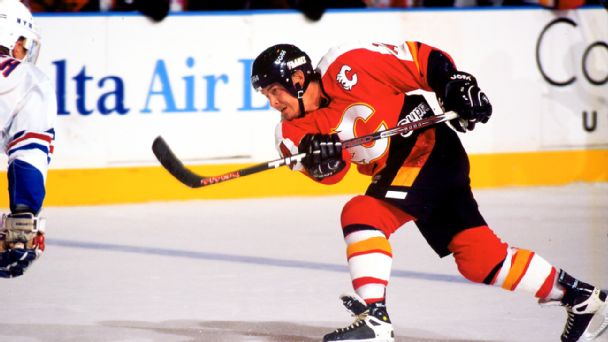
Standing at 5'6'' and weighing in at 150 pounds, your chances of making it into the NHL, the most elite hockey league in the world today, are slim. Back in the late 1980's, when the league featured a much more physically punishing game and the average sized player was 6' tall and 200 pounds, your chances of making it were approximately zero.
Key Takeaways
- Trauma is not just about major disasters; it is any event that shocks the nervous system into a state of survival.
- The "Find Your Five" rule is a practical method to kill the isolation that fuels depression.
- Positive self-talk is more than a cliché; it is a manifestation tool that overrides the brain's natural bias for negativity.
- Suppressing sadness is a fast track to anger and rage, which destroys homes and careers.
The Smallest Specialist on the Ice
That zero-percent chance is one of the many reasons why Theo Fleury is such a remarkable individual. Not only did he break into the NHL in 1988, but he did it with an exclamation point, featuring speed, tenacity, incredible skill and a flare for the dramatic. Once you get to know Theo's back story, you understand why he was able to make it on to the largest hockey stage in the world. Not only did he make it; he thrived. In 2006, Theo completed a career that included a Stanley Cup championship (1989), an Olympic Gold Medal (2002), over 1,088 career points in 1,084 games, and nearly 500 career goals. Outside of being born with incredible athletic ability, the reason he was able to succeed as an underdog was mental fortitude. We caught up with Theo to discuss the current state of the world, mental health, and what it takes to achieve your goals in life.
Unpacking the Shock to the System
Theo works in trauma, mental health, and addiction. He argues that all three are connected. Many men are living in a state of chronic trauma without even knowing it. Trauma can be subtle or extreme: a breakup, divorce, death in family, or being bullied. It takes work to "un-shock" the body. If you hold it inside, it causes emotional and physical problems. I have seen guys who carry decades of resentment and wonder why their lower back hurts every morning. Theo notes that internalizing everything and trying to outthink mental illness is a rabbit hole that only gets worse. Research from the American Psychological Association reinforces that chronic stress and suppressed emotions lead to long-term physical health declines. You cannot simply willpower your way out of a physiological nervous system response.
I remember a guy I played high school ball with. He was the toughest kid on the team. He never complained, never showed pain, and never talked about his home life. By twenty-five, he was a ghost, buried in a bottle and blaming everyone else for his temper. He had no outlet for the weight he was carrying. He didn't realize that his silence wasn't strength; it was a slow-acting poison. Theo advocates for therapy because talking about what happened to you is the only way to release that stored energy.
Developing a Habit of Connection
The definition of insanity is the repetition of the same actions while getting the same results, but expecting a different outcome. You won't get well if you don't try something different. Theo suggests a simple rule: "Find Your Five." Find five people and stay in contact with either one, or all five, on a daily basis, no matter how you feel. Depression wants you isolated. It thrives in the dark where there is no one to check your perspective. When the body is stressed it produces cortisol, which is acid in the system. In the state of stress, no other chemicals work in your body. The way to stop cortisol production is to be connected. Once you are, it will dissipate and allow you to be more aware and present.
This is why the debt of mentorship is so important. You need guys in your life who can see when you are drifting. Thinking about the past is depression, and thinking about the future is anxiety. The ultimate state of mind is trying to find a place in the present to work on things to keep you focused on today rather than yesterday or tomorrow. Use meditation, exercise, and routine. Routines provide the floor when the ceiling is falling down on you.
The Physics of Self-Talk
Theo is a firm believer in manifestation. He knew from a young age he would play in the NHL. He used positive self-talk to combat the noise. The greatest phrase is "I AM ____". It sounds soft to some guys, but it is literal reprogramming. According to Mayo Clinic researchers, positive thinking and self-talk improve cardiovascular health and provide better coping skills during hardships. The brain is like Velcro for negativity. It is a survival system designed to look for threats. Theo says it takes 5,000 positive thoughts to undo one negative thought. If you think negative, you will be negative. Keep telling yourself things like "I am good enough" and "I can accomplish anything."
He was surrounded by chaos at home. His father was an alcoholic and his mother was addicted to prescription pills. He found his happy place at the hockey rink. This is exactly what sports can teach your kids—how to find a group of people that instill core values when your primary environment is failing you. Theo didn't listen to the projections of others. If someone tells you that you aren't good enough, that is their reflection, not yours. They are projecting their own limitations onto you. Don't let their small vision dictate your height.
Real Men and the Emotional Valve
We asked Theo if "real men" cry. He didn't hesitate. Crying is a healing mechanism. It is why we have it. Theo grew up in the "suck it up" era where expressing sadness was forbidden. That suppression turns into anger, and then it turns into rage. If you don't vent the pressure, the tank explodes. Anger is usually just sadness that has been ignored for too long. You need hard work, dedication, and devotion to be successful, but you also need to be human. Embracing adversity is a gift to see how far you can push yourself. When Theo looked in the mirror, he didn't see a 5'6 player; he saw someone competitive and willing to do whatever it takes. It is all about attitude. Whether in hockey or in life, you get what you settle for. If you settle for a negative inner monologue, don't be surprised when your reality matches it.
What To Do This Week
- Identify your "Five." Write down five names of men you trust and commit to reaching out to at least one of them every single day.
- Monitor your internal dialogue. Every time you catch yourself saying "I'm a failure" or "I can't," stop and replace it with an "I AM" statement of fact.
- Get moving. If you feel the acid of stress building up, hit the gym or go for a run to burn off the cortisol.
- Look for a mentor or a group. Don't try to outthink your mental health issues in a vacuum; get outside your own head.
—Your Bro