You Get What You Accept in Relationships
If you are miserable in your relationship, you are likely the one who signed the contract. This is why high personal standards are your only real protection
By Your Bro · · Relationships
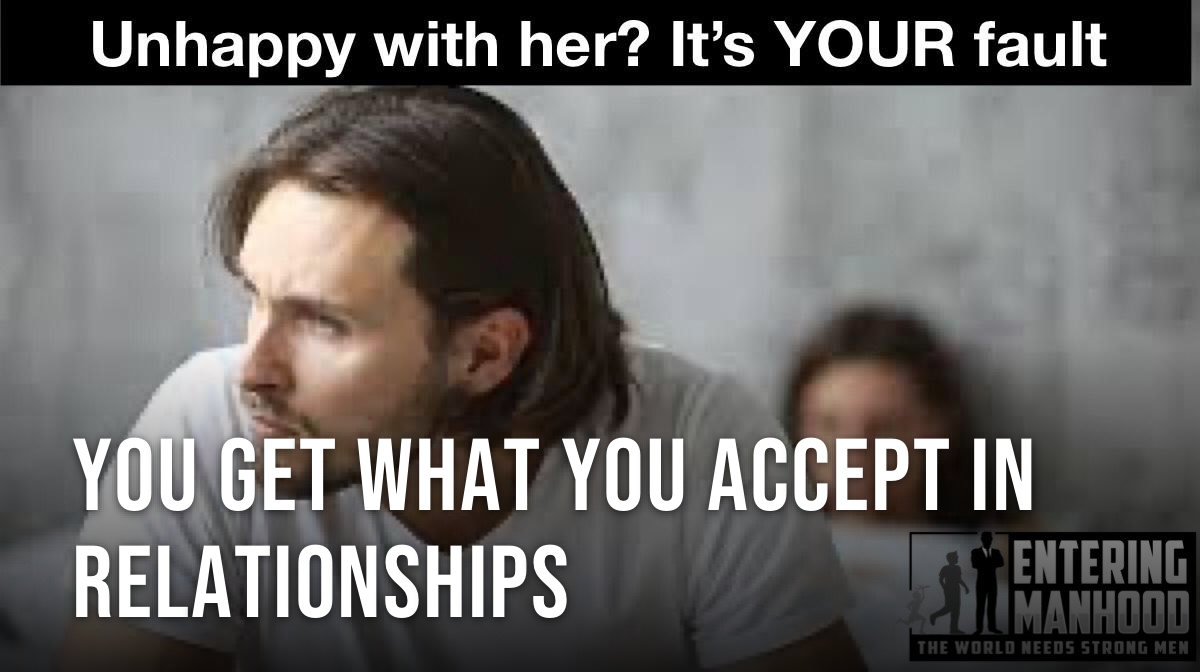
You are the architect of your own misery if you stay with someone who treats you like a second-tier option. If your relationship feels like a slow-motion car crash, stop looking at the driver and start wondering why you’re still in the passenger seat.
Key Takeaways
- Complaining about a partner’s behavior is useless if you continue to tolerate it.
- The standards you settle for become the ceiling of your happiness.
- Staying in a bad relationship is an act of self-disrespect that de-prioritizes your own values.
- You cannot change another person, but you can change your proximity to them.
The Myth of the Victim
I wish more people understood this simple dating concept. It's some hard to swallow advice I wish I'd gotten at a very young age because I wasted so much time in so many unsatisfying and miserable relationships. In an effort to help save you time and heartache, I hope this resonates with you.
If you're unhappy in a dating relationship and see yourself blaming the other person, finding fault and focusing on their flaws, you'll probably catch yourself telling people common complaints. She just doesn't listen. She is ungrateful. She's so selfish. She doesn't understand me. We never have sex. She's too lazy. She's not affectionate enough. These are valid frustrations, but they are also distractions.
When this happens, it's time to take the focus off your girl and actually take a long, hard look at yourself. The fact of the matter is simple: You are choosing to be part of this. You are allowing yourself to be involved with this person. You are the one committing to someone who doesn't really want, respect, have time for or love you the way you need to be loved. In other words, you're tolerating this, and in doing so, you are disrespecting yourself.
The Psychology of Staying
There is a psychological phenomenon called the sunk cost fallacy that keeps men in bad situations far longer than they should stay. You’ve invested three years, so you think you need to make it work to justify the time spent. In reality, you’re just throwing good years after bad. According to research from Pew Research Center, nearly half of U.S. adults say dating has become harder over the last decade, leading many to settle for subpar situations just to avoid the perceived emptiness of being alone.
You ignore red flags, and by doing so you're doing yourself a disservice. You're letting yourself down by staying. It's essentially a contract you sign every morning when you wake up and decide not to leave. If the terms of that contract include being ignored or belittled, you are agreeing to those terms. I spent two years with a woman who would go silent for three days every time she got annoyed. I thought I was being patient and "supportive." I wasn't. I was being a doormat with a pulse. I was teaching her that she could treat me poorly and I’d still be there to pay for dinner on Friday. I went deeper on this in the ways a bad relationship can alter your life, and the lesson is always the same: you train people how to treat you.
The Self-Disrespect Loop
All of this happens while you are de-prioritizing your own values, beliefs, feelings, and needs. When you accept less than you deserve, your self-esteem doesn’t just stay flat—it actively degrades. You start to believe that this is the best it gets. You look at your buddies who have decent, respectful partners and you tell yourself they just got lucky. It wasn’t luck; they had the spine to walk away from the women who didn't meet their criteria.
Research from the American Psychological Association suggests that chronic relationship stress can lead to significant long-term health issues, including increased risk for cardiovascular disease. Staying in a miserable loop isn't just annoying—it is literally killing you. This isn't just about dating; it's about whether you want to live a life governed by fear or one governed by standards. If you don't define your life code, you will continue to drift into these low-value arrangements.
Control is an Illusion
Let's face the facts: you cannot control another person, just yourself. Many learn this the hard way, and after several unfulfilling relationships finally understand what they need to feel happy in a relationship. You might think that if you just explain your needs one more time, or if you do one more big romantic gesture, she will suddenly become the person you want her to be. She won't. People change when they want to, not because you provided a PowerPoint presentation on why they’re failing as a partner.
I remember a guy I worked with who spent six months trying to convince his girlfriend to stop talking to her ex. He was miserable, stressed, and distracted at work. He kept saying, "If she just understood how it felt, she'd stop." No, she understood. She just didn't care. He was accepting it, so she kept doing it. He eventually learned that his only lever of control was the door. Once he used it, his life cleared up in weeks.
Raising the Bar
Make a promise to yourself right now: I will no longer tolerate poor treatment, ignorance or disrespect. I will raise my personal standards. I value reciprocal love, understanding and affection, not half-heartedness, emotional unavailability or selfishness. I decide what kind of relationship I'm going to be in. If someone isn't meeting your standards, move along and find someone who will. You owe it to yourself.
This is part of dating in a broken world. Because there are so many options and so much noise, having a rigid set of non-negotiables is the only way to filter through the nonsense. If you don’t have a filter, you shouldn’t be surprised when your life is full of trash. High standards aren't about being arrogant; they are about being honest about what you need to survive. It's like a job with a salary that doesn't cover your rent—no matter how much you like the office, you have to quit or you'll go broke.
What To Do This Week
- Write down the three things you complain about most in your current relationship.
- Acknowledge that by staying, you are technically consenting to those three things.
- Have one final, direct conversation about these boundaries. No emotional outbursts, just facts.
- If the behavior doesn't change immediately, set an internal deadline for when you will leave.
- Spend at least two nights alone this week to remind yourself that being single is better than being disrespected.
Closing the door on a bad situation is the only way to open one that actually fits. If you keep holding onto the wrong person, your hands won't be free when the right one shows up. Stop settling for the scraps and start acting like a man who knows his own value.
—Your Bro